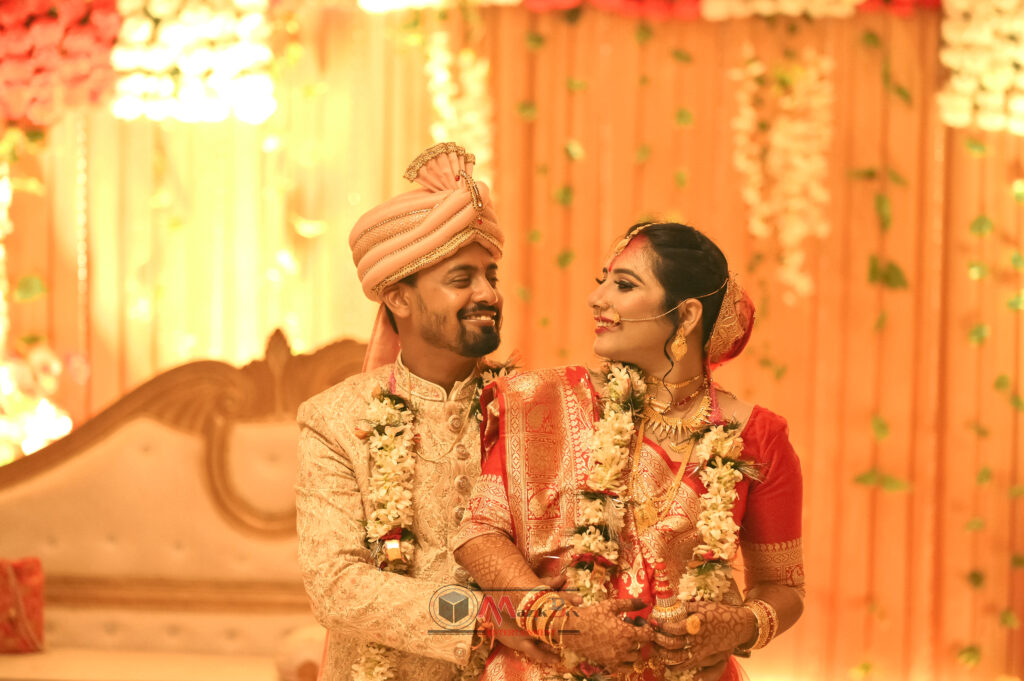
Bengali wedding rituals are not just ceremonies, they carry rich cultural heritage and meaning. Each ritual is unique and has its meaning, which sets traditional Bengali weddings apart. A beautiful love story begins as these rituals bind the bride and groom together.
7 Most Important Bengali Wedding Rituals
Bengali weddings are more than just exciting and meaningful rituals. They are a blend of exquisite food and entertainment. Bengali weddings are filled with joy, happiness and colours. Families and friends wear new and vibrant clothes. It is a series of amazing moments that make everyone’s hearts filled with warmth and happiness.
Here are some of the most interesting Bengali wedding rituals you must know:
1. Gaye Holud: The Turmeric Extravaganza
One of the vibrant rituals of Bengali weddings is the turmeric ceremony, also known as ‘Gaye Holud’. This is celebrated in the families of both the bride and groom. First, the groom applies the turmeric paste as it is considered auspicious. Afterwards, the remaining paste is brought to the bride’s home along with a new cotton saree and some other gifts. The remaining turmeric paste is then applied to the bride by her family and friends.
It is widely believed that the sacred turmeric paste protects the bride-to-be from evil eyes. The smearing of turmeric paste also symbolises purity and blessings. Historically, there were no beauty treatments or salons, so people used natural substances to brighten their skin. For all these, Gaye Holud became an integral part of Bengali weddings.
2. Subho Drishti: The Auspicious Gaze
The term ‘Subho Drishti’ literally means “auspicious gaze”. Shubho Drishti is the most iconic Bengali wedding ritual. In this ritual, the bride and groom exchange their first glance. The bride covers her face with a betel leaf and is carried by her brothers on a ‘peeri’ (a wooden plank used to sit on the floor). The bride takes seven rounds (also known as ‘Saat pak’) of the groom before being face to face with him for the ‘Subho Drishti’.
‘Subho Drishti’ symbolises the beginning of their marital journey, filled with hope and anticipation.
3. Mala Bodol: Swapping Garlands of Love
Mala Bodol is a delightful tradition. It involves the playful exchange of flower garlands between the bride and groom. As they playfully attempt to put the garland around each other’s neck, it symbolises acceptance and mutual respect. This lighthearted ritual shows the couple’s willingness to embrace each other’s differences. It represents the start of their shared journey, where love blooms like the flowers around their necks.
The bride and groom exchange garlands three times. To make it more fun, the male volunteers sometimes lift ‘peeri’ where the bride is seated. So the groom cannot change garlands with the bride. The male members of the groom’s own family did the same.
4. Sampradan: The Sacred Offering
‘Sampradan’ is an emotional ritual. The word ‘Sampradan’ means giving. It is the moment when the father gives his daughter’s hand to the groom, for eternity. It’s almost like he’s handing over a piece of his heart. He does this while repeating a few religious mantras, which roughly means: “I wish you a lifetime full of love and affection.” “A lifetime full of understanding and togetherness.”
This ritual is a sacred exchange of responsibilities, promises, trust and love. It also shows that the bride’s father entrusts his daughter to her groom. The Sampradan ritual brilliantly captures the spirit of familial relationships and the transition from one family to another.
5. Gaatchhora: The Eternal Knot
The term ‘Gaatchhora’ means knot. This is an important Bengali wedding ritual. It involves tying a knot between the clothes of the bride and groom. The knot is tied by one of the female family members. This ritual symbolises the binding of their lives in love, shared responsibilities, unwavering trust, hopeful aspirations and lifelong togetherness. It serves as a powerful visual representation of their commitment and partnership for life.
The Gaatchhora ritual holds profound significance. It represents the couple’s inseparable relationship as they begin on the journey to marital happiness.
6. Saptapadi: Seven Steps to Forever
An important Bengali wedding ritual is ‘Saptapadi’, or seven steps around the sacred fire. The groom takes the lead of the first 4 rounds or ‘pheras’ around the fire. The bride then takes the final 3 rounds with her fiance in tow. In some Bengali families, ‘Saptapadi’ involves 7 betel leaves laid out in a straight line on the mandap floor.
With each step, the couple makes seven vows. They pledge to support and cherish each other in sickness and health, joy and sorrow. This ritual symbolises the journey of life. As they complete the seven steps, they unite into an unbreakable bond.
7. Sindoor Daan: Sealing the Promise
Sindoor Daan holds immense significance in all Indian weddings. According to Bengali tradition, the groom applies vermillion onto the bride’s forehead using a variety of items. The ‘Sindoor Daan’ is a powerful gesture. It represents not just the marriage of two people, but also the union of their souls. The bright crimson sindoor is a timeless symbol of love and loyalty.
The groom may use a mirror, ring or a rice measurement tool known as a ‘kunki’ for applying the sindoor. While applying sindoor on the bride’s forehead, the groom is not permitted to see her face. He must look to the other side while completing this wedding ritual. Once the sindoor is applied the bride’s head is covered with a new saree presented by the groom’s family.
Conclusion
In conclusion, Bengali weddings are not just ceremonies. It’s a happy union between two families. This is a celebration of togetherness. From Gaye Holud to Sindoor Daan, every ritual fills the heart of the bride and groom with love and commitment. With vibrant colours, decor and delicacies, Bengali weddings are a saga of rich traditions and happy emotions.